Critical metals drive mining in the south-west of the Iberian Peninsula (El Periódico de Extremadura)
3 December 2025 – Source elperiodicoextremadura.com

Projects in the area of influence of the Iberian Pyrite Belt involve investments worth millions of euros, and the government is focusing on the area as part of its plan to secure more key resources.
The resurgence of mining in search of the most valuable resources needed to cope with the energy transition and digitisation has revitalised the south-west of the country. The sector has also faced opposition because of environmental concerns.
The Iberian Pyrite Belt, which lies in southern Portugal (the Algarve and Alentejo regions) and the northern part of the province of Huelva as far as Seville, is one of the key areas on the map, as it is where a large percentage of copper deposits are concentrated. This area makes Spain the European Union’s second-largest producer of copper.
It is one of the focal points of the plan drawn up by the government, through the Ministry for the Ecological Transition and the Demographic Challenge (Miteco), to obtain the metals required for that transition: critical metals.
The programme, to be implemented jointly with the Geological and Mining Institute of Spain (IGME-CSIC), the autonomous communities and other stakeholders, aims to take advantage of current technology to search both for resources that have already been identified – thanks to existing geoscientific studies – and for new deposits, by means of new geophysical analyses and remote sensing, geochemical campaigns and additional boreholes.
In this Atlantic strip there are several ongoing projects that are spearheading the mining sector in south-west Spain.
Among them is Minas de Aguas Teñidas (MATSA), which currently operates three underground mines. Located in the province of Huelva, the Aguas Teñidas and Magdalena mines are in the municipality of Almonaster la Real, while the Sotiel mine is in the municipality of Calañas. They produce copper, zinc and lead concentrates.
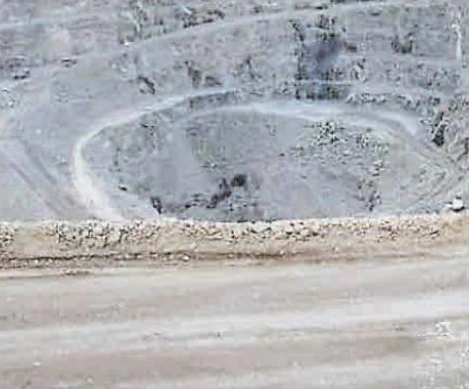
Atalaya Mining operates the historic Riotinto mine, an open-cast mine working at full capacity, processing 15 million tonnes of ore a year to generate more than 55,000 tonnes of copper concentrate annually at its treatment plant.
Cobre Las Cruces, located in Gerena (Seville) and owned by the Canadian multinational First Quantum Minerals – currently seeking a new owner – saw its initial reserves exhausted in 2020. But in March the European Commission designated the new underground mine project on the same site as strategic. The plan is not only to produce copper but also zinc, lead and silver, all from the same polymetallic deposit. The project will involve an investment of more than 850 million euros and is expected to operate for at least 20 years.
Minera Los Frailes, part of Grupo México, has already obtained all the permits needed to operate the Aznalcóllar deposit. The overall investment in this project is around 450 million euros, with a target of 170,000 tonnes of zinc concentrate, 55,000 tonnes of lead concentrate and 13,000 tonnes of copper concentrate annually.
Finally, Finnish company Emerita Resources is developing a project in the Pyrite Belt – between the municipalities of Paymogo and Puebla de Guzmán – known as Iberian Belt West, comprising three polymetallic sites: Infanta, El Cura and Romanera. Previous exploration of these deposits was carried out in the 1970s and 1980s by major companies, including Asturiana, RTZ and Phelps Dodge.
Sunday, 30 November 2025.
Extremadura, cradle of the seven sites that the EU wants to promote in Spain
Lola Lucene
The use of minerals has been linked to Extremadura since the earliest peoples settled in the region. Gold-mining operations and metallurgy in Lusitania were highly dynamic during the Roman era. Over the centuries, the extraction of resources – gold, silver, lead, copper, iron ore, manganese, tungsten and uranium – has created a rich history in this land, which today has become a powerhouse in quarrying and ornamental stone.
On 25 March the region moved to the forefront of the EU’s list of critical reserves for the continent. The European Commission presented the first list of 47 projects under the Strategic Raw Materials Act, i.e. strategic minerals to strengthen European sovereignty at a complex geopolitical moment. The aim is to make Europe less dependent on minerals from China, Russia and other countries, imported from different parts of the planet and indispensable for industrial and technological development.
Of the 47 selected projects, seven are Spanish, and Brussels has included three from Extremadura: lithium extraction at Cañaveral (Cáceres), tungsten in Almoharín (Cáceres) and nickel at Monesterio (Badajoz). In total, investments worth 500,000 million euros are planned for three villages with a combined population of some 7,000 inhabitants.
Aguablanca: 20% of European nickel capacity
According to the Ministry for the Ecological Transition, the Aguablanca mine in Monesterio, which was already in operation between 2003 and 2015, could provide up to 20% of Europe’s nickel production (currently mined only in Finland and Greece). Hence the EU is backing the project by Narcea Resources, which plans to restart operations, creating 330 direct jobs.
Its start-up is part of a wider project promoted by the PhiDTech group, Lithium Iberia and several investors, which includes a cell manufacturing plant in Badajoz, lithium extraction in Cañaveral and a methods factory. It requires an investment of 100 million euros.
Almoharín: the largest tungsten reserve in Europe
Under the name P6 Metals, the company Iberian Resources Spain expects to create around 500 direct jobs and more than 250 indirect jobs in the extraction and processing of tungsten and tin at the La Parrilla deposit – reopening Europe’s largest tungsten reserve. Tungsten, also known as wolfram, is a strategic mineral because of its enormous hardness and its use in metallurgy, aeronautics and the defence industry.
Located between Almoharín (Cáceres) and Santa Amalia (Badajoz), the deposit has attracted great interest, to the point that the Prime Minister of Japan, the Finance Minister and Japanese business groups have met with the Vice-President of the European Commission, Stéphane Séjourné, to discuss reducing the EU’s dependence on China, which exports 85% of the world’s tungsten.
Cañaveral lithium: 2.5 million cars per year
This project is also considered strategic. The Las Navas project, located in the municipalities of Cañaveral, Holguera and Pedroso de Acim, has the capacity to supply battery-grade lithium for around 10 years. The company Lithium Iberia plans to invest 340 million euros to process about 1.2 million tonnes of ore and 30,000 tonnes of lithium hydroxide a year, enough for 2.5 million electric vehicles annually.
Las Navas contains one of the most important lithium reserves in the EU. The project provides for 30 years of open-cast and underground mining and a production plant for lithium hydroxide, which is key for batteries. It will create at least 430 direct jobs and 1,200 indirect ones.
The Extremadura Newspaper


